50% OFF FALL PROMOTION! Step into fall purposely with 1:1 coaching. Only 2 coaching slots available. Click HERE.
Happy Birthday, Purposely Digital!
Thoughts on running an ethical and intentional business one year on
Sarah E. Carter, PhD
7/1/20266 min read
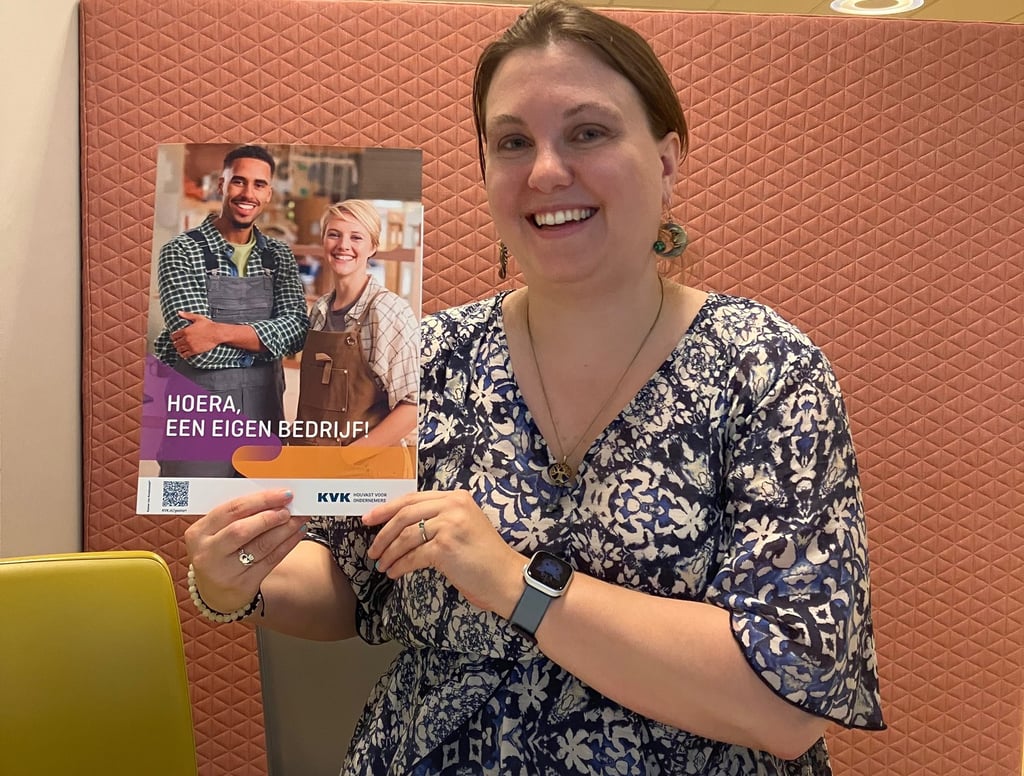
Today marks exactly one year since I registered Purposely Digital at the Dutch chamber of commerce (KvK). I can still remember the paperwork, the nervous excitement, the smiling KvK employee congratulating me, and the feeling of stepping into something wondrous but completely unknown.
One year later I'm still here. Still figuring it out, and still committed to building something rooted in consciousness, values, and love. A business of service.
As a celebration of one year, I wanted to write this piece for fellow business owners and self-employed persons trying to build something that feels true to them.
I don't have all the answers, but perhaps the lessons I have learned this year will spark something for you.
Changing my Mindset Around Marketing
When I launched, I defined success in money because I thought that was what "good business owners should do." Set revenue targets, hit milestones and goals, and continue moving upwards.
But that mindset never sat right with me because it was so divorced from why I started Purposely Digital and what actually matters - the breakthrough moments in coaching sessions, the quiet shifts in how someone sees themselves. Those powerful, human moments that cannot be quantified.
And yet I pushed forward with financial goals anyway, because a "should" is a powerful foe to overcome.
Then I hit the wall I think many of us values-driven entrepreneurs crash into: marketing.
My background in ethics - specifically researching how invasive data practices and targeted advertising undermine human autonomy, and how to promote more value-centered data privacy decisions - made marketing feel... well, evil. During my PhD, I interviewed people about their visceral discomfort with surveillance-based advertising. Those conversations shaped me deeply. So when it came time to "market" my own business, my body rebelled. Full-on nausea. Chest tightness. A twisting in my stomach.
So I avoided it. I relied entirely on referrals and word-of-mouth. And like so many conscious entrepreneurs, I have discovered that approach alone doesn't generate sustainability.
I'm now reconsidering that marketing could be something other than aggressive self-promotion. It's understanding that "getting yourself out there" - done with honesty and integrity - doesn't have to be manipulative. It can be about service and helping. If I genuinely want to help people navigate technology intentionally, I first need to be findable by them.
There's a sentiment from an old Beatles song that I think captures this beautifully - the idea that the world holds enough for everyone, and we can each take what we need to sustain ourselves without taking more than our fair share. A piece, but not too much.
Over the next year, I'm working toward an ethical marketing practice that reflects that balance. For anyone who feels similarly allergic to conventional marketing, I'd invite you to sit with a few questions:
What would it look like to put your work forward with complete honesty and integrity?
How might it feel in your body if "putting yourself out there" became an act of service, rather than the bottom line?
Why the Companies You Choose Matter
This is something I've been thinking about quite a bit this past year. When you run a values-led business, every tool you use is an endorsement. Every subscription payment funds something. Every platform you build on reinforces a particular vision of how the digital world should work - a certain set of values and way of thinking.
Early on, my approach was very cautious.
No AI tools.
Proton Business Suite for emails and files because of their longstanding privacy commitments.
Hostinger for EU-based, GDPR-compliant web hosting with zero tracking cookies - because my own research showed most people find surveillance advertising "creepy" regardless of how companies present it as "helpful personalization."
Zoom for calls because it seemed like what professional coaches use.
Substack and LinkedIn for outreach, avoiding Meta-owned platforms given their documented history with unethical algorithmic practices and data privacy violations.
That setup felt protective. But it also felt constraining - defined more by what I was saying "no" to than "yes" to.
Over the past year, that's started to change for me. I've moved from caution to intentionality, and nowhere is that clearer than in my growing alignment with Proton's ecosystem. (I promise this is not a paid endorsement; I just like them!)
The first change came with my videoconferencing service provider. Zoom raised prices tied to AI features I deliberately disable to protect client confidentiality. Paying more for services I do not use - and potentially funding infrastructure that could access call recordings and transcripts - created serious "red flags" for me. Zoom has also previously made false claims about end-to-end encryption and faced criticism over data-sharing arrangements with Google and Meta. My lack of trust in Zoom was already irking me - coaching standard or not. The price increase to support AI services just pushed me over the edge.
So I switched to Proton Meet. Yes, the functionality isn't quite there yet, and I've had to ask clients for patience during technical mishaps. But every call is end-to-end encrypted by default - Proton literally cannot access conversation contents by design. Clients trust me with deeply personal conversations and I want to honor that with a videoconferencing provider who takes their privacy seriously.
The change for me involved AI. When I started, I had a strict no-AI policy to protect client data, preserve my authentic writing voice, and avoid supporting companies whose values conflict with mine (I'm looking at you, open AI!). But watching clients, particularly women business owners balancing work with caregiving responsibilities, use AI tools thoughtfully to reclaim time for what matters most to them... I started questioning whether blanket avoidance was actually the most intentional choice for me, or if there might be a middle road that still respects my values.
I began cautiously using Lumo from Proton for editing posts and occasionally asking for business advice, such as branding, marketing, and positioning. Results have been mixed. Sometimes Lumo flattens my otherwise passionate voice until it stops sounding like me. Other times - particularly when my LinkedIn posts get a bit too, shall we say, verbose - Lumo helps me anchor back to the core point I'm trying to make while keeping my voice intact.
What ultimately made this possible for me is that Lumo is an AI that better aligns with my values. When I started my business, there was not one available that really did that for me. Lumo's open-source nature means we can independent verify every data privacy claim. Building on existing foundation models also reduces environmental impact - water and electricity - compared to training new systems from scratch.
Both of these moves for me - Proton Meet replacing Zoom, Lumo replacing my absolute AI prohibition - have grown from the same realization: what value-centered technology engagement means evolves with the technology itself. I coach people to engage with technology intentionally, making conscious and ethical choices that ring true to them. It's a journey, a process, constantly evolving and adapting with curiosity and self-reflection.
So my business has moved closer to Proton this year because their architecture, transparency, business model, and stated mission align with what I believe - that privacy is a right, and not a privilege.
If you're evaluating your own business technology and service providers, here's what I'd ask:
Which tool are you using that gives you the ick - that subtle somatic discomfort you maybe haven't fully acknowledged yet?
What would it look like to replace it with something that feels like a proud "yes" rather than a "meh"?
Looking Forward
The journey continues. Purposely Digital will keep evolving, and so will I.
For the coming year, I've reframed my milestones around the idea of helping others rather than traditional business milestones:
First, developing a marketing approach grounded in ethics and values.
Second, polishing this website and online presence so it's clear who might benefit from working with.
Third, completing my ICF ACC coaching certification to sharpen my coaching and show up fully prepared for the people who place their trust in me.
I'm increasingly confident that pursuing these goals will also help me start to develop financial sustainability - taking that piece of cake to keep going, without taking more than I need.
This mindset shift has already brought unexpected relief. Letting go of hard financial numbers and focusing on service to others creates space for me to just... breathe. It's still scary, of course, and untangling self-worth from income doesn't happen overnight.
But then I open my client log, I see names stretching to July 2025. I read reflections from people who felt genuinely seen and heard through our work together - who found practical strategies for working with rather than against their neurodiversity, or who regained a sense of balance they'd fear they could never gain back.
Those moments remind me why I started.
And I smile.
Whatever happens next, this path is one well worth walking.
Photo: Registering Purposely Digital at the KvK on July 1, 2025
Purposely Digital
hello[at]purposely-digital.com
© 2025 - 2026. Purposely Digital. All rights reserved.
Purposely Digital's AI Policy
Intentional AI that preserves human agency and authenticity
A Privacy-By-Design Business
Because it's your data - your choice
KvK #: 97684155
VAT ID: NL005284412B47
Business Address
De Nieuwe Erven 3
13359
5431 NV Cuijk
Nederland